Introduction: Overlooked religions in Hong Kong
Introduction: Overlooked religions in Hong Kong
Abstract
Meet DeepDyve
Get unlimited, instant access to over 150 million full-text scientific articles for less than the price of buying a single PDF.
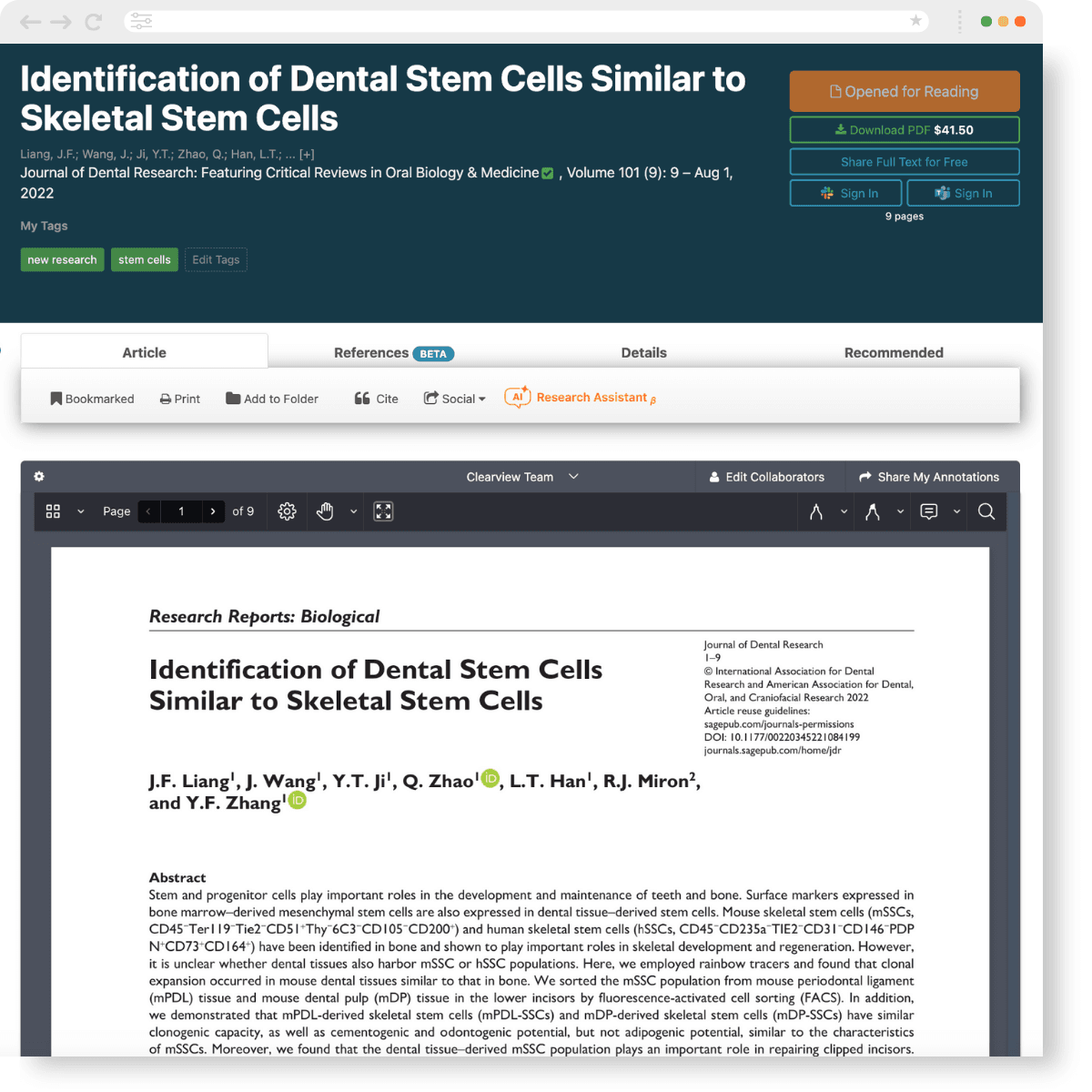
DeepDyve Collection
Access top-tier journals without the top-tier price. We partner directly with the world’s leading academic publishers to bring you legally compliant, instant access. Read the latest findings from Springer, Wiley, Oxford University Press, and more—all in one subscription.
Browse our collection of titles from leading publishers










AI Research Assistant
Accelerate your research with our advanced AI tools. Chat directly with your uploaded papers, and DeepDyve’s 50M+ LitStream and OA collections of full-text papers. AI responses come directly from the literature, footnoted and sourced, to provide the most authoritative and verifiable responses. AI outputs powered by OpenAI and Anthropic Claude. AI Smart Folders (coming soon)
Stop wasting time on paywalls, pirated sites and scattered journal portals
Streamline your research workflow with DeepDyve's comprehensive literature management solution for less than the price of buying a single PDF.
Try 1 month for $0